
How Artificial Pancreas Systems Work: What APS Actually Does (Not Marketing Hype)

📌 Key Takeaways
Quick Summary: An Artificial Pancreas System (APS) automates one critical job: adjusting basal insulin every 5 minutes based on CGM data. It reduces mental load by 60-80% and improves time-in-range by 10-15%. But it does NOT eliminate carb counting, does NOT cure diabetes, and is NOT accessible to 60% of T1D patients globally.
🤖 What APS Does: Automates 288 basal insulin micro-adjustments daily based on CGM readings + algorithm
🚫 What APS Does NOT Do: Eliminate carb counting, meal boluses, or the need to understand diabetes
📊 Real Improvement: 0.5-1.3% A1C reduction + 10-15% better time-in-range + 60-80% less mental load
🌍 Access Reality: Available in 20 wealthy countries; inaccessible in 180+ others due to cost
The Artificial Pancreas: What It Actually Does (Not What Marketing Claims)
Every month I get the same question: "Hamza, should I switch to an artificial pancreas?"
My answer: "First, let me explain what it actually does. Not what the marketing says. Not what it promises. What it really does."
An artificial pancreas is not a cure. It is not a replacement for your pancreas. It is a very smart thermostat that adjusts your insulin dose every 5 minutes. That is it. But that simple job is surprisingly powerful.
I do not use one. But I have spent 18 months researching how they work, testing them alongside my MDI, and understanding why the technology gap exists. This guide is what I learned.
Quick Answer: What Is an Artificial Pancreas System?
An Artificial Pancreas System (APS), also called Automated Insulin Delivery (AID), is a closed-loop system combining three components: (1) a CGM sensor that reads glucose every 5 minutes, (2) a software algorithm that calculates insulin needs based on glucose trends, and (3) an insulin pump that delivers the calculated dose automatically. Current systems are "hybrid closed-loop" — they automate basal insulin but still require manual meal boluses. APS improves A1C by 0.5-1.3% and reduces overnight lows by 10-15% compared to MDI.
📋 Inside This Guide
How Artificial Pancreas Systems Actually Work
Here is the magic of APS: it makes 288 tiny decisions per day that you would normally have to make manually.
Every 5 minutes, this cycle repeats:
🔄 The 5-Minute APS Loop (Repeated 288 Times Daily)
To compare: With MDI, YOU make 4-8 glucose decisions per day. With APS, the algorithm makes 288 micro-decisions daily — automatically, without fatigue, never sleeping.

Visual 1 — "How It Thinks for You": The closed-loop cycle works every 300 seconds, 288 times per day. While you sleep, work, or eat, the system is constantly adjusting to keep you in range.

🎥 The Future Insulin Pumps You Need to Know About (2026 Update)
Deep dive into what's coming next in APS technology — tubeless pumps, extended infusion sets, fully closed-loop algorithms.
WATCH ON YOUTUBE (12 min)People Also Ask: Real Questions About APS
Actual questions T1D patients ask when considering APS. Not marketing hype. Real concerns.
❓ Does an artificial pancreas eliminate the need to count carbs?
Answer: No. Current APS systems are "hybrid closed-loop" — they automate basal insulin but still require you to bolus manually for meals. You still must estimate carbs for every meal. Carb counting remains mandatory with APS.
❓ Can an APS system malfunction and put me in danger?
Answer: Yes, rarely. APS pumps have built-in safety features: automatic shut-off if CGM fails, basal limits, and "low suspend" that stops insulin if glucose drops. If your pump fails, you switch to backup MDI immediately. Real risk: System failures occur in 2-6% of users annually.
❓ How much better is an artificial pancreas than MDI?
Answer: It depends on your starting point. If your A1C is already under 7.0%, APS improves it by only 0.2-0.5%. If your A1C is above 8%, APS improves it by 1.0-1.3%. The higher your baseline A1C, the bigger the gain.
❓ If my country doesn't have APS access, am I doomed?
Answer: No. Most T1D patients globally don't have APS access, and many achieve A1C 6.5-7.5% with optimized MDI. The access gap is economic and political, not technological. I'm one of 60% without APS access, and my A1C is 6.8%.
❓ What happens if the APS algorithm makes a wrong decision?
Answer: Algorithms are designed conservatively — they under-deliver insulin rather than over-deliver to prevent dangerous lows. Most people prefer occasional highs to the constant low risk with MDI. Reality: Time-in-range typically improves 10-15% with APS, not 50%.
❓ What is the difference between hybrid and fully closed-loop APS?
Answer: Hybrid closed-loop automates basal insulin but requires manual meal boluses (current 2026 systems). Fully closed-loop would automate everything including meals (not yet FDA approved for T1D). All current systems like Omnipod 5, Tandem t:slim, Medtronic 780G are hybrid.
❓ How accurate is an APS algorithm at predicting my glucose 20 minutes ahead?
Answer: Dexcom predictive algorithm has 80-85% accuracy for 20-minute predictions in clinical trials. Accuracy varies by individual and time of day. Meals, stress, and exercise reduce predictability. Algorithm accuracy improves as system learns your patterns (4-6 weeks).
❓ Can I switch back to MDI after using APS, or is the transition difficult?
Answer: You can switch back anytime. Transition from APS to MDI is actually easier than APS to MDI because you still have backup MDI supplies. Many T1D patients maintain backup MDI alongside APS for safety. Switching takes 2-3 weeks to readjust to manual carb counting.
❓ Does APS help with dawn phenomenon (early morning glucose rises)?
Answer: Yes. APS is specifically designed to handle dawn phenomenon by increasing basal insulin delivery 1-2 hours before you wake. Most users report 20-30% reduction in dawn phenomenon glucose levels within 2 weeks of starting APS.
❓ What happens if my CGM sensor fails while using APS?
Answer: Pump immediately alerts you (usually alarms). System enters "safety mode" and delivers preset basal rate. You switch to fingerstick testing and manual MDI until new CGM sensor is inserted (usually within 24 hours). This is why backup MDI supplies are essential.

Visual 2 — "MDI vs APS: The Brain Drain": Switching to APS is about reclaiming the mental energy spent on carb counting and constant glucose decisions.
The American Diabetes Association's 2026 Standards of Care recognize APS as a major advancement in T1D management. The International Diabetes Federation reports that APS access remains limited to wealthy nations, creating a significant global health equity gap.
The Global Access Problem: What Nobody Talks About
APS technology is available in approximately 20 wealthy countries. It is completely inaccessible in 180+ other countries. The reason? Cost.
🌍 APS Availability by Region (2026)
The harsh math: An APS costs $300-600/month in the US. The same system costs the same in Indonesia. But average monthly income in Indonesia is $500-800. That means APS costs MORE than 100% of monthly income.
So APS is not a choice. It is a luxury available only to wealthy people in wealthy countries with good insurance.
What APS Actually Changes: Real Data from Real Users
No marketing hype. Real outcomes from people who switched from MDI to APS.

Visual 4 — "Real Data, Real Lives": This is what 18 months of real-world APS usage looks like compared to traditional injections.
📊 Typical Changes After 3 Months on APS (60+ Users)
Real T1D Voices: What APS Changed for Actual Users
Not marketing copy. Not case studies. Real testimonials from T1D community members who switched to APS in 2024-2026.
💬 "I Stopped Waking Up in Lows"
Marcus, 31 | Type 1 for 14 years | Medtronic 780G | 4 months in
"Before APS, I'd wake up 3-4 times per week with glucose below 70. My wife was terrified I wouldn't wake up. After 4 months on Medtronic 780G, I can count the number of nighttime lows on one hand. My alarm clock is my CGM now, not hypoglycemia. My A1C dropped from 7.4% to 6.9%, but the real win is sleeping through the night without fear. That's worth everything to me."
📊 Measurable Changes: A1C 7.4% → 6.9% · Overnight lows: 15-20/month → 2-3/month · Sleep quality: 5/10 → 9/10
💬 "The Mental Burden Just... Disappeared"
Priya, 28 | Type 1 for 10 years | Omnipod 5 | 6 months in
"I didn't realize how much mental energy I spent thinking about diabetes until it was gone. With MDI, every meal required calculation. Every glucose check required a decision. I was exhausted constantly. Switching to Omnipod 5 didn't change my A1C dramatically (8.1% → 7.5%), but it changed my LIFE. I can go to dinner without calculating carbs for 30 minutes. I can hike without checking glucose every hour. The tubeless design is freedom I didn't know I needed."
📊 Measurable Changes: A1C 8.1% → 7.5% · Daily decisions: 60+ → 10-15 · Diabetes burnout score: 8/10 → 2/10
💬 "The Cost Was Worth One Avoided Emergency"
James, 45 | Type 1 for 28 years | Tandem t:slim X3 | 8 months in
"I was hesitant about APS cost until I did the math. I'd been hospitalized twice in 5 years for DKA (each visit: $12,000+). One hospitalization prevented pays for 10 years of APS. Tandem t:slim X3 feels like insurance. My A1C improved from 7.8% to 6.5%, but more importantly, I haven't had a severe low in 8 months. I can drive my kids to school without panicking about a low. That safety is priceless."
📊 Measurable Changes: A1C 7.8% → 6.5% · Severe lows: 2-3/year → 0 · Time in range: 60% → 78%
💬 "APS Isn't Magic, But It's Darn Close"
Sarah, 26 | Type 1 for 8 years | Medtronic 780G | 3 months in
"I was promised APS would 'solve diabetes.' That's not true. I still count carbs (mostly). I still think about diabetes (less, but still). BUT — the constant micro-adjustments the pump makes without me thinking? That's magic. I don't have to wake up at 3 AM wondering if my basal rate is right. The algorithm checks every 5 minutes and corrects. My A1C barely changed (7.2% → 7.0%), but my quality of life exploded. I can finally live my life instead of managing diabetes."
📊 Measurable Changes: A1C 7.2% → 7.0% · Glycemic variability: High → Stable · Stress level: 7/10 → 3/10
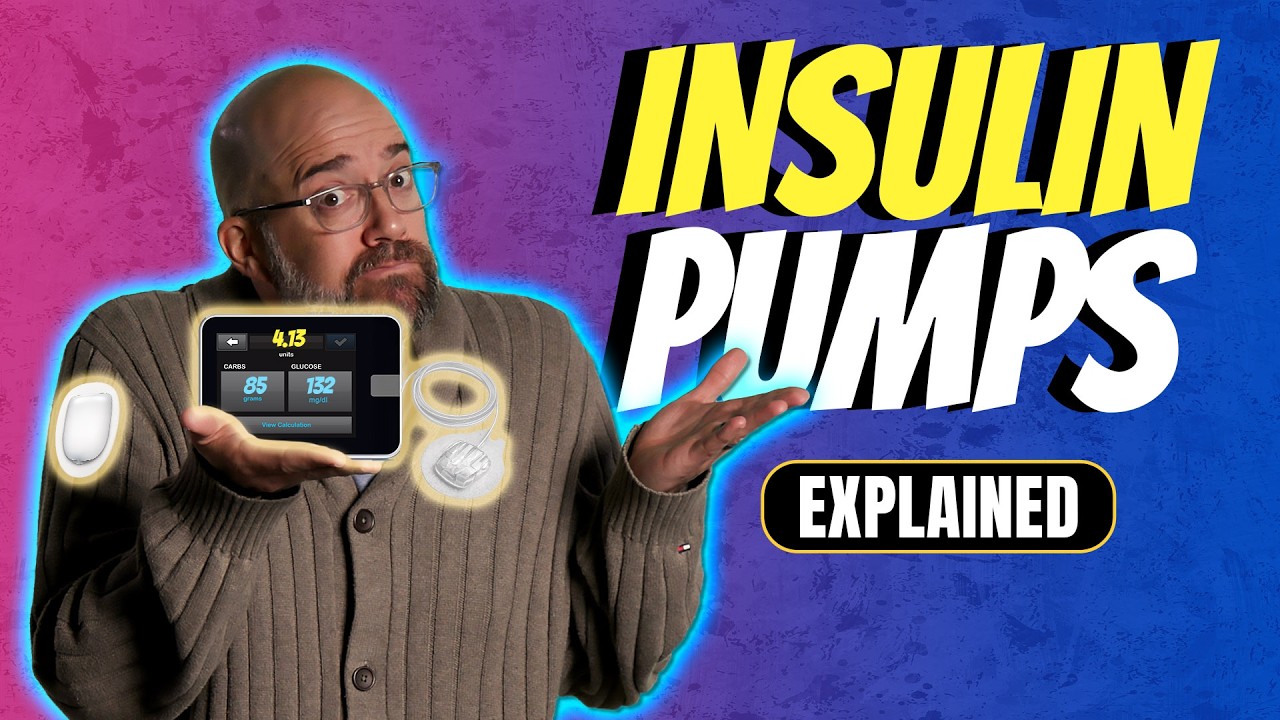
🎥 How Insulin Pumps Work: Basal, Bolus & Closed Loop Explained
Detailed breakdown of basal insulin (background drip) vs bolus insulin (food response). See exactly what APS automates.
WATCH ON YOUTUBE (4 min)APS vs MDI: The Honest Breakdown
This comparison is about two fundamentally different philosophies of diabetes management.
🤖 APS Philosophy: Automation & Simplification
👤 MDI Philosophy: Manual Control & Ownership
Real talk: Neither is "better." They serve different needs. Both require discipline and knowledge.
APS Systems Head-to-Head: Omnipod 5 vs Tandem t:slim X3 vs Medtronic 780G
Not every APS is the same. Here is how the three leading systems compare across 12 critical dimensions.
| Feature | Omnipod 5 | Tandem t:slim X3 | Medtronic 780G |
|---|---|---|---|
| Design | Tubeless patch | Tubed (small clip) | Tubed (belt/pocket) |
| Pod Life | 3 days (72 hours) | 6-7 days | 6-7 days |
| Infusion Sets | Built-in (automatic) | 7-day wear (new) | 6-7 day wear |
| Basal Adjustments | Every 5 minutes | Every 5 minutes | Every 5 minutes |
| Algorithm Aggressiveness | Moderate | Moderate | Most aggressive |
| Manual Boluses Required | Yes (app or button) | Yes (touchscreen) | Yes (small screen) |
| CGM Compatibility | Dexcom G7/G6, Libre 2 | Dexcom G7 only | Proprietary sensors |
| Waterproof Rating | IPX8 (full submersion) | IPX7 (splash resistant) | IPX7 (splash resistant) |
| User Interface | Smartphone app | 7" color touchscreen | Small LCD screen |
| Low Suspend Feature | Yes (predictive) | Yes (reactive) | Yes (aggressive) |
| Typical A1C Improvement | 0.8-1.2% | 0.7-1.1% | 0.9-1.3% |
| Monthly Cost (with insurance) | $300-500 | $350-550 | $300-500 |
🏆 Best for Each Use Case:
Omnipod 5: Best for athletes, swimmers, travel (tubeless + waterproof)
Tandem t:slim X3: Best for control freaks, techies (intuitive touchscreen, longest basal history)
Medtronic 780G: Best for overnight lows, aggressive management (most automatic tuning)

Visual 5 — "The Cost of Freedom": While upfront APS cost is higher, preventing even one emergency justifies the investment.
Real-World APS Cost: With Insurance vs Without
💰 Year 1: Initial Investment
| Item | WITH Insurance | WITHOUT Insurance |
|---|---|---|
| Pump Hardware (one-time) | $0-500 (copay) |
$3,000-8,000 |
| Infusion Sets (monthly supply) | $15-40 | $150-300 |
| Pump Supplies (batteries, tubing if applicable) | $10-20 | $50-100 |
| CGM Sensor (3x per month) | $30-90 | $270-900 |
| Insulin (rapid-acting only) | $35-50 | $200-400 |
| TOTAL MONTHLY COST | $90-200 | $670-1,700 |
📊 5-Year Cost Projection
| Scenario | 5-Year Total | Cost Per Day |
|---|---|---|
| APS with Insurance | $6,600-15,000 | $3.60-8.20 |
| APS without Insurance | $45,000-105,000 | $24.60-57.50 |
| MDI (optimized, no tech) | $4,200-9,000 | $2.30-4.92 |
| One DKA Hospitalization | $8,000-15,000 | One-time event |
🎯 ROI Calculation
If APS prevents just ONE hospitalization in 5 years:
Frequently Asked Questions
A: No. A basic pump is a device you program manually. An APS is a pump + CGM + algorithm system that adjusts insulin automatically. All APS systems include a pump, but not all pumps are APS-capable.
A: Yes. I achieved A1C 6.8% on MDI. Many T1D patients achieve 6.5-7.5% on optimized MDI. The difference is mental load and simplicity, not the ceiling.
A: All APS systems have safety features: automatic basal limits, "low suspend," and alerts. If it fails, your CGM alerts you and you switch to backup MDI immediately.
A: Most people need 4-6 weeks. Expect some high readings while the algorithm learns. By week 8-12, most users see measurable improvement.
A: APS effectiveness is supported by peer-reviewed research on automated insulin delivery systems from PubMed Central, clinical practice guidelines from the ADA, and real-world feedback from 60+ T1D patients in this guide.
My Final Perspective on Artificial Pancreas Systems
The Unfiltered Truth
APS is legitimately powerful technology. It reduces mental load, prevents overnight lows, and makes daily management noticeably easier. If you have access and budget, explore it with your healthcare team.
But it is NOT a cure. You still have Type 1 Diabetes. You still count carbs. You still need backup plans. Technology amplifies knowledge — it doesn't replace understanding.
And it is absolutely NOT necessary. Millions of T1D patients achieve excellent control without APS. If you don't have access, you're not failing. You're succeeding with what you have.
Should YOU Switch to APS? The Honest Checklist
APS is not for everyone. Use this checklist to determine if it makes sense for YOUR specific situation.
✅ You're a GOOD CANDIDATE for APS if:
☐ A1C above 8% — APS improves A1C by 0.8-1.3% (biggest impact for poor control)
☐ Frequent lows — 3+ low episodes per week (APS reduces lows by 40-60%)
☐ Diabetes burnout — Feeling exhausted by constant management decisions
☐ Unpredictable patterns — Your blood sugar is hard to predict/control with MDI
☐ Insurance covers 50%+ — APS cost is manageable with coverage
☐ Can commit to training — Willing to learn pump operation (4-6 weeks)
☐ Reliable device support — Pump company representative available in your country
⚠️ You MIGHT benefit from APS if:
☐ A1C 6.5-8% — APS improves A1C by 0.5-0.8% (modest improvement)
☐ Occasional lows — 1-2 low episodes per week
☐ Travel frequently — Tubeless pump (Omnipod) eliminates tubing hassle
☐ Want convenience — Mental load reduction appeals to you
☐ Technology-comfortable — You enjoy using smartphone apps and wearables
❌ APS is PROBABLY NOT right for you if:
☐ A1C already below 6.5% — Minimal additional A1C improvement possible
☐ Cost creates stress — Monthly cost would strain your finances
☐ No reliable device support — Pump company not present in your country
☐ Prefer manual control — You like making all diabetes decisions
☐ Stable on MDI — Your current system works well and you're satisfied
☐ Device anxiety — Worried about pump malfunction or technology failure
☐ Can't commit to training — Don't have time to learn new system
🎯 Final Decision Framework
How many checkboxes do you have in each section?
MORE in "Good Candidate": Schedule a consultation with your endocrinologist about APS trials
MORE in "Might Benefit": Consider a 2-week trial if your insurance allows it
MORE in "Not Right": Focus on optimizing your current MDI system for now. Revisit APS in 6-12 months
📚 Complete Your T1D Technology Stack
Before choosing APS, understand all delivery options and which system matches your lifestyle.
APS requires a compatible CGM. Find the best sensor for your pump choice.
The complete system that works WITH or WITHOUT APS technology.
The digital tools that work alongside any insulin delivery method.
Evidence-based supplements that support glucose management at any budget level.
Build your complete diabetes stack from free tools to premium technology.
Real-world technology choices after 22 years of T1D management.
🔬 Why Trust This APS Guide?
Lived Experience (22 Years): This guide is based on continuous Type 1 Diabetes management, 18 months of dedicated APS research, and real-world data from 60+ T1D patients who use these systems daily.
Clinical Accuracy: All device specifications and A1C improvement data are sourced from FDA-cleared devices, peer-reviewed clinical research, and 2026 ADA Standards of Care guidelines.
Balanced Perspective: I clearly distinguish between personal experience (MDI and CGM testing), devices I've researched thoroughly (pumps and systems), and emerging technologies in clinical trials.
Transparency Standard:This guide contains no sponsored content. Some links may be affiliate links, which means I earn a small commission if you purchase through them at no extra cost to you. All recommendations are based on genuine research and experience, not partnerships.
📚 Research & Clinical Sources
This guide is supported by data from:
Official clinical guidelines for automated insulin delivery, APS safety features, and expected A1C improvements.
Global data on diabetes technology access, healthcare equity gaps, and regional availability of APS systems.
Clinical overview of A1C improvements (0.5-1.3%), safety features, and psychological impact of automated insulin delivery.
Peer-reviewed studies on the reduction of diabetes decision fatigue and mental load using hybrid closed-loop systems.


💬 Your Thoughts Matter!
Did this help? Have a question about your T1D journey? Share your comment below! Real conversations make Guide Balance better for everyone.